BreaQ

BreaQ

Breaking the Boundaries of Quantum Uncertainty

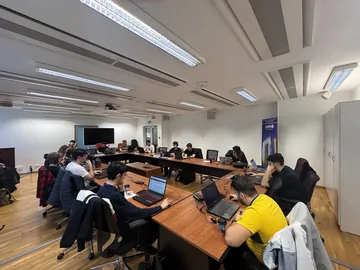
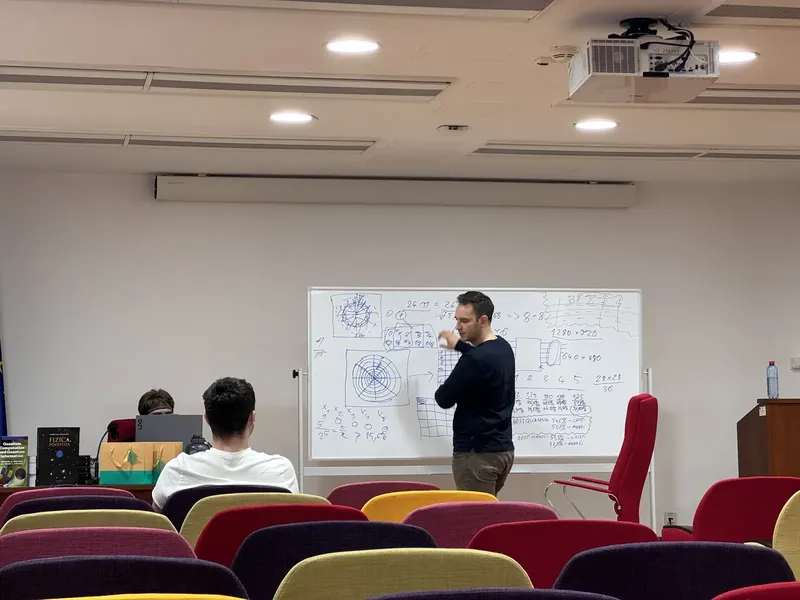
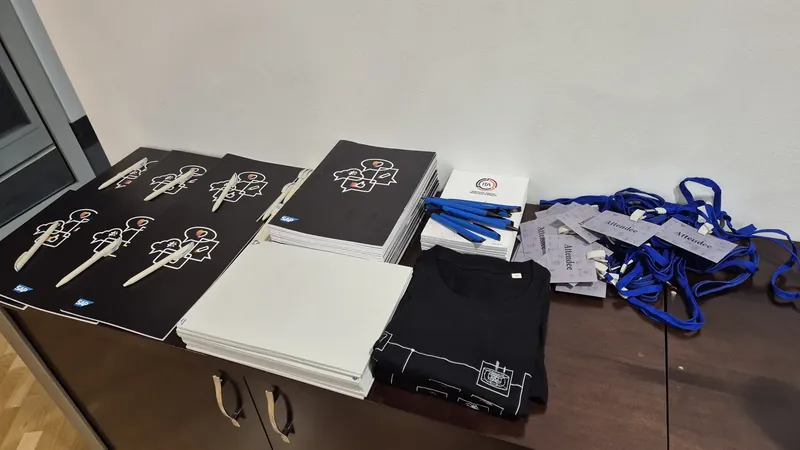
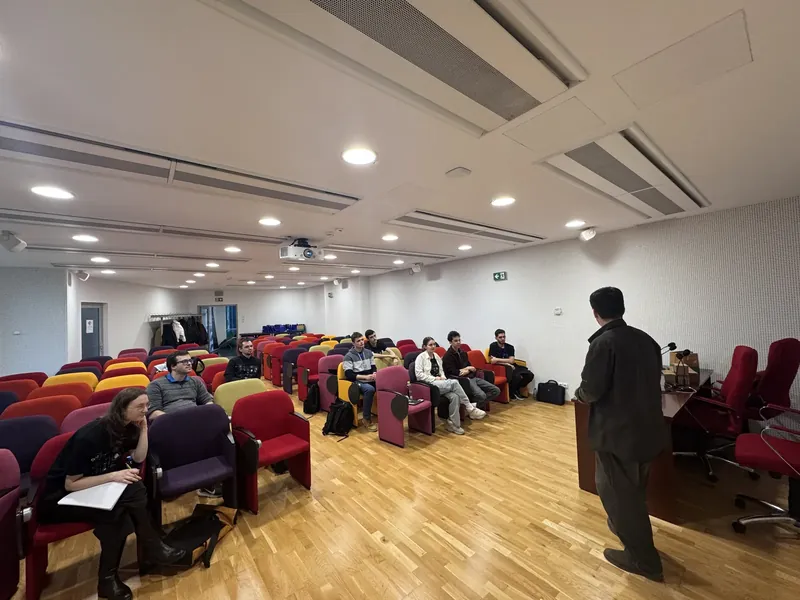
BreaQ is more than an event — it’s a catalyst for Romania’s quantum future. Over several days, we’ll bring together scientists, students, innovators, and curious minds to explore the mysteries of quantum technologies. Through inspiring talks, hands‑on workshops, and a high‑energy hackathon, we’ll transform uncertainty into understanding, and ideas into action. Whether you’re a student, researcher, or simply curious about the quantum world, BreaQ is your chance to learn, connect, and collaborate with Romania’s growing quantum community.

Register


What to Expect

  1. Scientific Presentations & Workshops

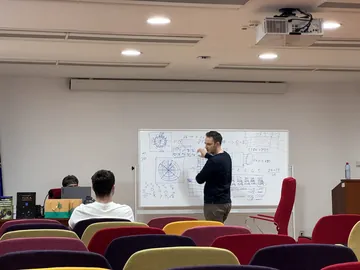
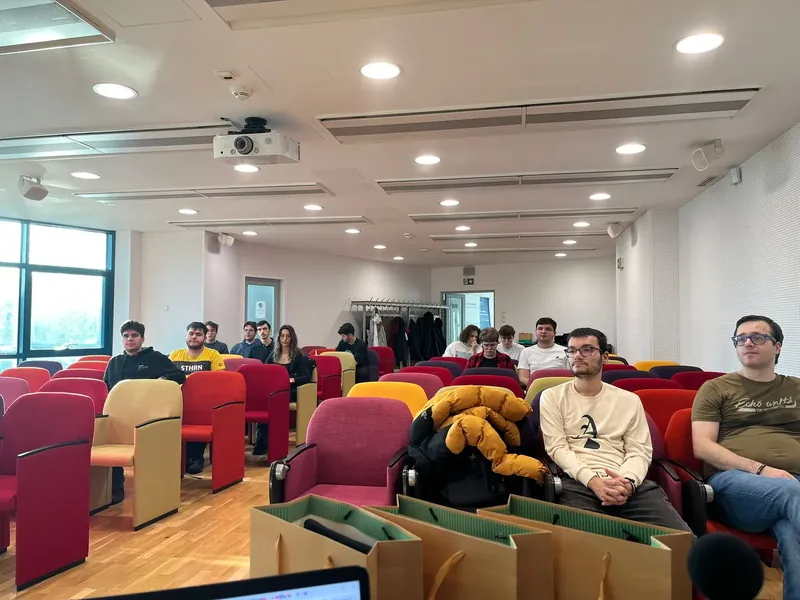
    Engage with leading researchers and industry experts as they share the latest breakthroughs in quantum computing, communication, and sensing — from foundational theory to real-world applications — through dynamic presentations, interactive webinars, and self-paced courses designed for all experience levels.

  2. Quantum Hackathon

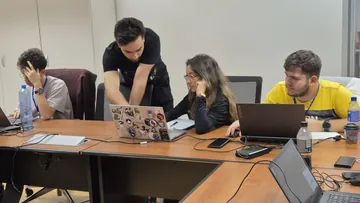
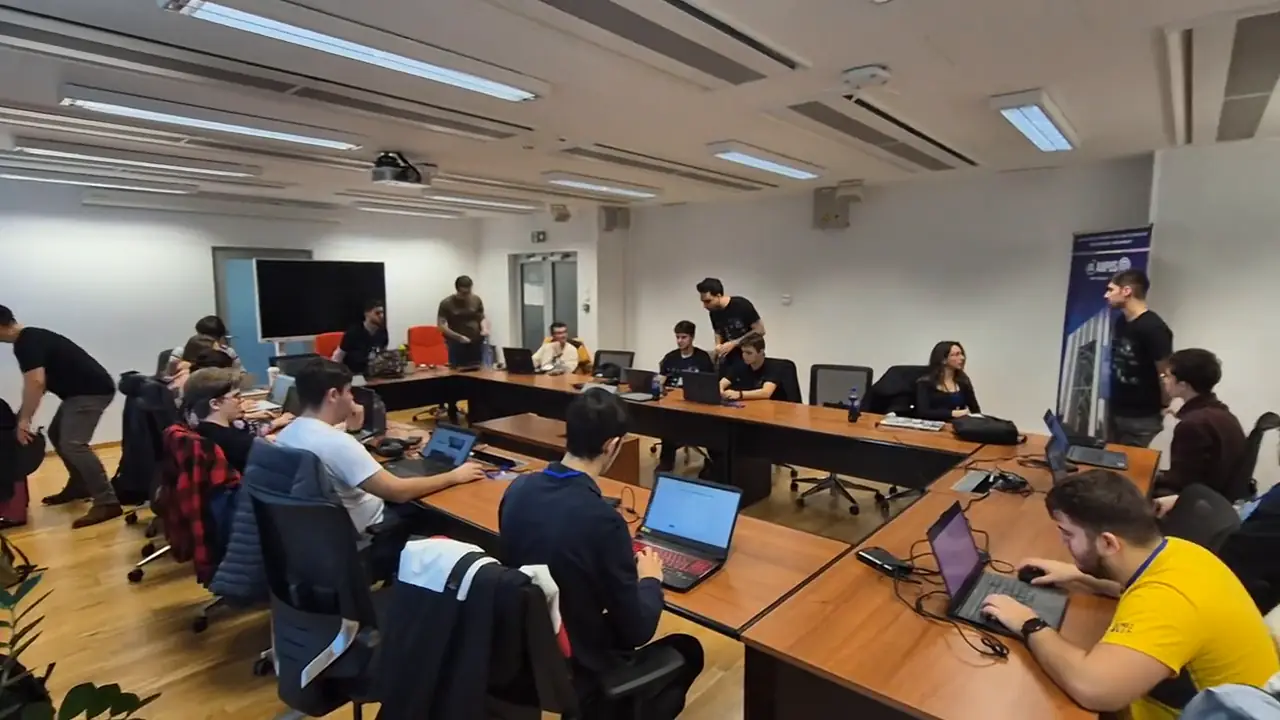
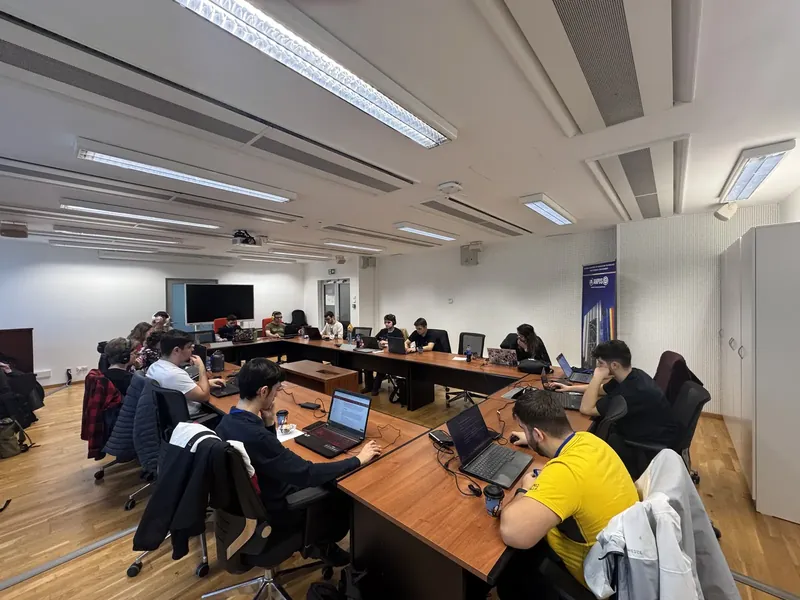
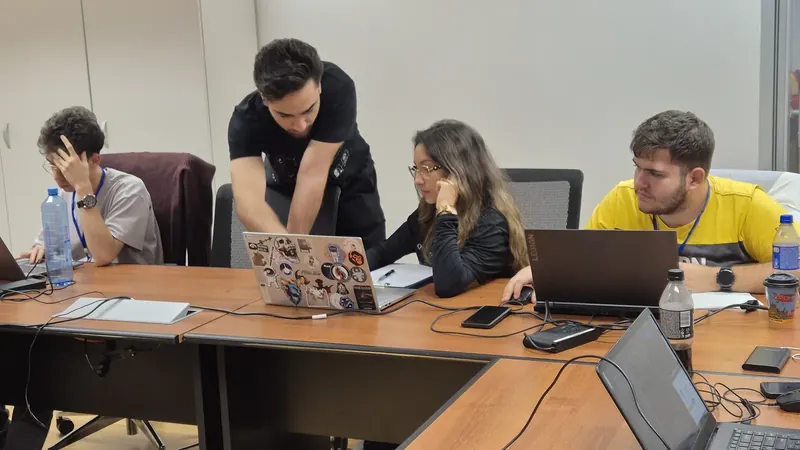
    A variety of hands-on challenges where participants tackle real-world quantum problems, guided by experienced mentors. Each task explores cutting-edge directions such as quantum algorithms, quantum hacking, and quantum machine learning, with opportunities to prototype solutions and compete for recognition and prizes.

  3. Networking & Collaboration

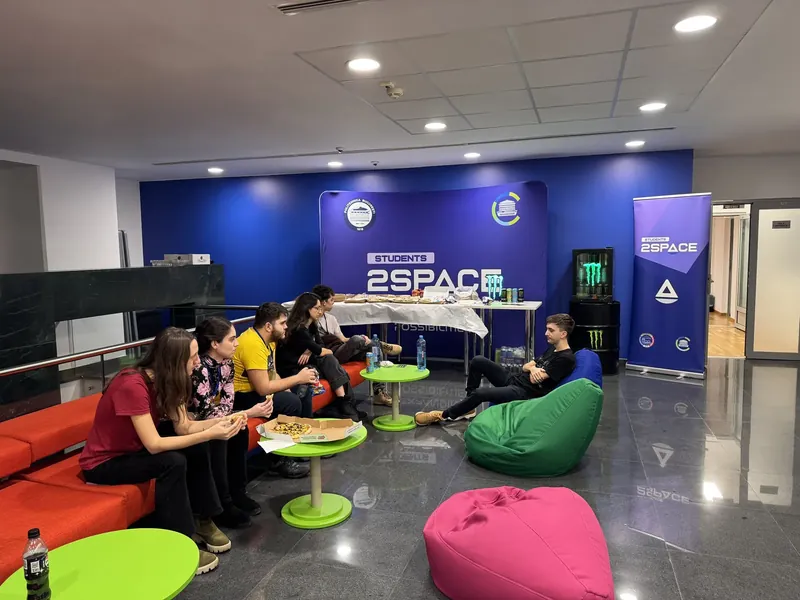
    Meet fellow enthusiasts, potential collaborators, and future employers. Build connections that last beyond the event horizon.

Organizers

Sponsors

Partners

Speakers

Radu Ionicioiu, PhD

Senior Researcher (CS I) in Quantum Technologies Horia Hulubei National Institute of Physics and Nuclear Engineering (IFIN-HH)

Ștefan Ataman, PhD

Senior Researcher (CS II), Extreme Light Infrastructure-Nuclear physics (ELI-NP)

Gabriel Pavel

Regional Director Balkans, Hungary, Czech and Slovakia, Fsas Technologies - a Fujitsu company; Co-founder, CPO and Board Member, Apollo AI Technologies; Owner, AMODENT SRL;

Nicu Becherescu, PhD

Business Development Manager, Qruise

Mona Mihăilescu, PhD

Professor at Department of Physics, Faculty of Applied Sciences, Bucharest National Polytechnic University of Science and Technology (UNSTPB)

Diana Maimut, PhD

Cryptography Expert, Advanced Technologies Institute

Cristina Cirstoiu, PhD

Lead Research and Development Scientist, Quantinuum, Quantum Software Research Theory team, Cambridge

Thierry Kaldenbach

Quantum Computing Researcher, German Aerospace Center; PhD Candidate, Leibniz Universitat Hannover

Andreea-Iulia Lefterovici

CEO Innovailia; PhD Candidate, Leibniz Universitat Hannover

Cosmin Andrei

PhD Candidate in Quantum Information, Oxford University

Ionut Anita

Computer Science Engineer, Special Telecommunications Service

Organizing Committee

Albert-Ioan Florea

Research Assistant, Technical University of Munich

Alexandru Ionita

Quantum Machine Learning Researcher, AIMultimediaLab; PhD Candidate, Bucharest National Polytechnic University of Science and Technology (UNSTPB)

Cristian Ilie

Telecommunications Engineer, Special Telecommunications Service, PhD Candidate, Bucharest National Polytechnic University of Science and Technology (UNSTPB)

Filip-Ioan Ceara

Research and Develompent Expert, Advanced Technologies Institute

Schedule

November 15 - Military Technical Academy "Ferdinand I"

Time Presentation Speaker
9:30 - 9:45 The journey of a quantum community Cristian Ilie
Introducing RoQTeam
9:45 - 10:45 Cybersecurity: before and after the quantum apocalypse Radu Ionicioiu
Quantum computers will soon be powerful enough to break current public-key infrastructure. This will compromise critical infrastructures, mobile banking, software updates, blockchain and digital signatures, among others. How to prevent this incoming Quantum Apocalypse? I will talk about recent developments in quantum cryptography and the development of the future quantum internet.
10:45 - 11:10 Coffee Break
Enjoy your entanglement time!
11:10 - 11:30 Hybrid benchmarking of quantum algorithms Andreea-Iulia Lefterovici
Hybrid benchmarking is an alternative way to asymptotic worst-case analysis, gauging the performance of a fault tolerant quantum hardware platform for solving real-world instances of optimisation problem. The overall strategy is to evaluate how a quantum algorithm would perform under idealised assumptions and to identify the ranges where a quantum algorithm could potentially be useful. In this talk, I’ll present a methodology that goes beyond the asymptotic scaling for assessing the potential performance of quantum algorithms in ideal conditions.
11:30 - 12:00 Fujitsu’s Quantum Mindset: Innovation Through Collaboration Gabriel Pavel
12:00 - 12:50 Computational quantum advantage for dynamical simulations Cristina Cirstoiu
Simulating quantum systems is a central challenge in physics and one of the most promising applications of quantum computers. Today’s quantum hardware can already tackle problems that stretch the limits of classical simulation. This talk gives an accessible overview of the capabilities and limitations of near-term quantum computing, the importance of benchmarking in characterizing performance, and the role of error correction in future scalability. In particular, I will discuss a digital dynamical simulation of a 2D quantum magnetism model on the 56-qubit trapped-ion Quantinuum H2 device. Using combined error suppression and mitigation techniques, we observe Floquet pre-thermalisation at timescales where state-of-the-art classical simulations become extremely difficult, if not infeasible for the particular setting considered.
12:50 - 13:30 Lunch Break
13:30 - 13:50 Weak Values: Interpretations to Applications Andrei Cosmin
This talk reviews weak measurements and post-selection with a focus on how weak values are interpreted and used in modern applications. I synthesize two strands that often talk past each other: (i) instrumental uses such as weak-value amplification and minimally invasive inference via weak-valued conditionals, and (ii) recent interpretational claims that treat weak values as properties of the system rather than of the meter.
13:50 - 14:40 Breaking the standard quantum limit: quantum metrology and the brave new non-classical world Stefan Ataman
The shot-noise limit (SNL) ,also called the standard quantum limit (SQL), is a classical bound that limits the precision when it comes to parameter estimation. With the advent of quantum metrology, the SQL is not anymore a fundamental limit. Indeed, by venturing into the quantum regime one is able to reach the so-called sub-SNL regime. Thus, by taking advantage of this new regime, more precise measurements become possible. As extreme examples of quantum metrology we discuss the success of gravitational wave astronomy by employing squeezed states as well as microscopy at te Heisenberg limit by using highly entangled photons.
14:40 - 15:20 Fast gradient-free optimization of excitations in variational quantum eigensolvers Thierry Kaldenbach
Finding molecular ground states and energies with variational quantum eigensolvers is central to chemistry applications on quantum computers. Physically motivated ansätze based on excitation operators respect physical symmetries, but existing quantum-aware optimizers, such as Rotosolve, have been limited to simpler operator types. To fill this gap, we introduce ExcitationSolve, a fast quantum-aware optimizer that is globally-informed, gradient-free, and hyperparameter-free. ExcitationSolve extends these optimizers to parameterized unitaries with generators $G$ of the form $G^3=G$ exhibited by excitation operators in approaches such as unitary coupled cluster. ExcitationSolve determines the global optimum along each variational parameter using the same quantum resources that gradient-based optimizers require for one update step. We provide optimization strategies for both fixed and adaptive variational ansätze, along with generalizations for simultaneously selecting and optimizing multiple excitations. On molecular ground state energy benchmarks, ExcitationSolve outperforms state-of-the-art optimizers by converging faster, achieving chemical accuracy for equilibrium geometries in a single parameter sweep, yielding shallower adaptive ansätze and remaining robust to real hardware noise. By uniting physical insight with efficient optimization, ExcitationSolve paves the way for scalable quantum chemistry calculations.
15:20 - 15:40 Coffee Break
Enjoy your entanglement time!
15:40 - 16:10 Quantum Hacking: Securing the Future of Quantum Systems Cristian Ilie
Quantum technologies promise revolutionary advances in communication, computation, and sensing, but their real‑world implementations are not immune to attack. This talk surveys the emerging field of quantum hacking, highlighting vulnerabilities in devices, algorithms, and communication protocols. From side‑channel leaks and imperfect detectors to protocol manipulation and algorithmic tampering, we will explore how adversaries can exploit these weaknesses — and why building resilient, trustworthy quantum systems is essential for the future.
16:10 - 16:40 Mastering ImperfeQtion: From Theory to Practice in the Quantum Wild Diana Maimut
Cryptographers and security practitioners are much more concerned nowadays with reducing the distance between the theory behind cryptographic algorithms and their implementations. Even though there is always a gap between theory and practice, an imperfection so to say, we advance in science through the pursuit of superiority and, thus, there's always room for improvement. The presentation aims at setting the stage for a security mindset in a quantum world.
16:40 - 17:10 Post-Quantum Cryptography: NIST Standardization and the Mathematics Behind It Ionut Anita
This presentation reviews NIST’s progress toward post-quantum cryptography, covering the open call for proposals, the multi-round public evaluations, and the criteria used to select candidate algorithms for standardization. It highlights key milestones—such as the release of draft FIPS for PQC after several evaluation rounds—and summarizes ongoing work on additional signature schemes and on practical guidance for migration from quantum-vulnerable systems. Emphasis is placed on security objectives, expected timelines, interoperability, and concrete preparation steps.
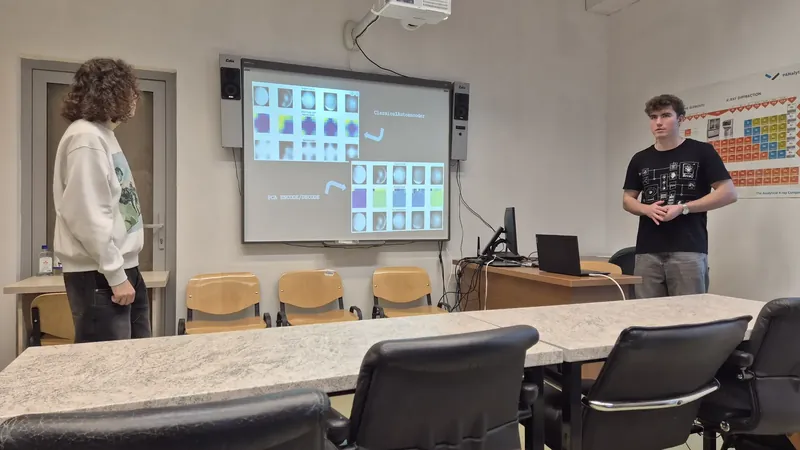
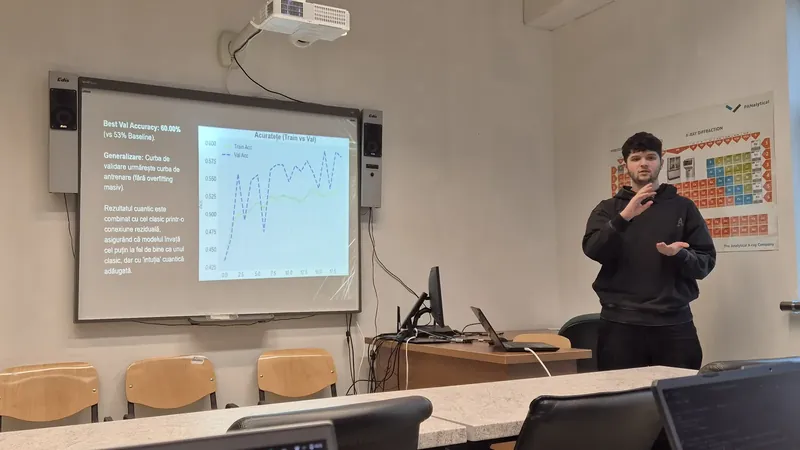
17:10 - 17:40 Quantum Machine Learning for Image Classification: Challenges and Perspectives Alexandru Ionita
Image classification has been transformed by classical neural networks and advances in computational hardware, motivating the exploration of quantum-enhanced learning models. Quantum machine learning is expected to provide advantages in generalization, representation efficiency, and optimization by leveraging high-dimensional Hilbert spaces and quantum correlations. Both purely quantum neural networks and hybrid quantum–classical models offer distinct pathways toward this goal: the former promise fundamentally new computational paradigms, while the latter enable practical integration of quantum resources within established frameworks. This work examines the comparative advantages and limitations of these approaches in the context of image classification and outlines key challenges and research directions for advancing quantum-enabled learning systems with near-term technology.

November 17 - CAMPUS Research Institute

14:30 - 15:00
16:30 - 17:00
Quantum Optics in Action: Bridging Theory and Experiment Mona Mihailescu
Participants will explore the quantum optics lab in two teams organized in advance through the Discord channel repsecting the specified time of arrival.

November 19 - Online

20:00 - 21:30 Classiq Workshop Adam Gitter
To Be Announced

November 20 - Online

17:30 - 18:20 Bridging the simulation-reality gap in quantum computing Nicu Becherescu
The performance of quantum devices often falls short of their theoretical design due to complex, interacting noise sources and imperfect calibrations. Qruise addresses this challenge by developing advanced software tools that close the gap between simulated models and real hardware behavior. Our core products ( QruiseOS and QruiseML) provide an integrated environment for control, orchestration, and learning across heterogeneous quantum platforms. QruiseOS ensures flexible and hardware-agnostic system operation, while QruiseML leverages differentiable digital twins and machine learning to extract hidden parameters, accelerate calibration routines, and systematically optimize gate performance. By combining physics-informed modeling with data-driven inference, Qruise enables quantum hardware teams to achieve higher fidelities, faster development cycles, and deeper insight into device dynamics, ultimately paving the way toward scalable, fault-tolerant quantum computing.

November 22, 23 - CAMPUS Research Institute

22.11 - 9:00 Welcome
22.11 - 9:30 Coding begins
23.11 - 9:30 Coding ends
23.11 - 10:00 Presentations and judging
23.11 - 13:00 Awards ceremony

Hackathon Challenges

Quantum Codebreaking

Quantum cryptanalysis algorithms pose a great threat to currently deployed cryptosystems, especially on the public key side. Within this challenge, participants will use Classiq for implementing state-of-the-art quantum algorithms with direct applications in the field of cryptanalysis.

Entangled Learning

Quantum machine learning harnesses superposition and entanglement to encode data in high-dimensional quantum feature spaces, potentially revealing correlations inaccessible to classical models. Participants will explore these advantages using PennyLane, developing and testing quantum models on a classically challenging dataset to probe the potential of quantum learning.

Breaking Quantum Realities

Quantum hacking exposes weaknesses in quantum devices, algorithms, and communication protocols. Participants will explore how real‑world imperfections can be exploited, showing that even quantum technologies are not immune to attack.

Venue

CAMPUS Research Institute

Splaiul Independenței nr. 313, Sector 6, București, 060042


Military Technical Academy "Ferdinand I"

Bulevardul George Coşbuc nr. 39-49, Sector 5, București, 050141

FAQ

Who is this event for?

This event is for anyone interested in quantum computing, from complete beginners to advanced experts, including students, researchers, professionals, and enthusiasts.

What is the cost of attending the event?

Participation in the event is free, you just have to bring your creativity and good will!

Where is the event located?

The event will be held at the Military Technical Academy “Ferdinand I” [Presentation session] and the CAMPUS Research Institute [24-hours Hackathon] in Bucharest, Romania. Check our venue section for more details.

What are the event dates and times?

The main components of the event will be on November 15 - the presentation session and on November 22, 23 - the 24-hours hackathon. Details can be found on our schedule section.

In what format will the event be held?

The event is structured around two components: a presentation session that intertwines professionalism, creativity, and enthusiasm, and a hackathon, where participants will develop innovative solutions to diverse challenges through quantum technologies.

How can I contact the organizers for other questions?

Once you are accepted as a participant, you will receive an invitation to the official Discord server. You can also email us at romaniaquantumteam@gmail.com.

What should I bring to the in-person hackathon?

Bring a valid ID for registration, your laptop, and be prepared to learn while having fun.

Are meals provided during the event?

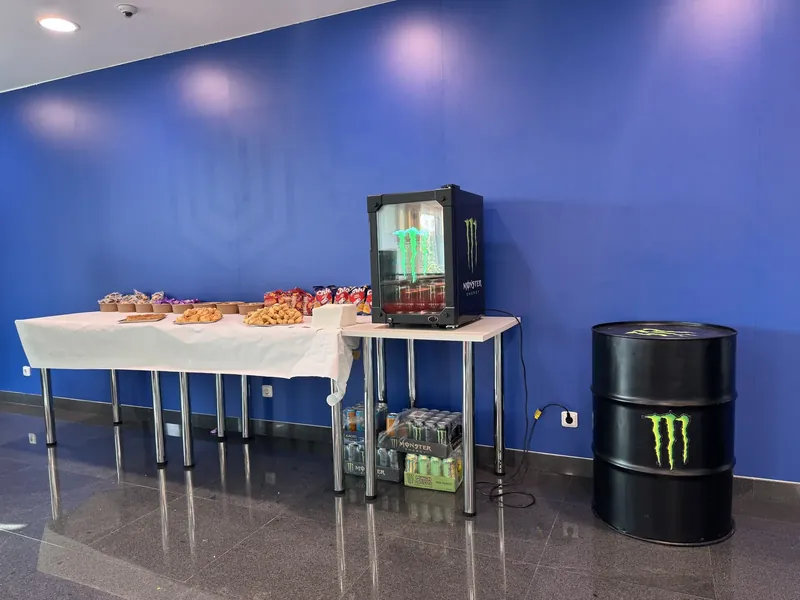
Yes, meals and refreshments will be provided. Please indicate any dietary restrictions during registration.